“AI-powered marketing” is all the rage right now, and businesses are trying to sort out what’s useful from what’s just noise. One tool promises to write your content. Another says it can manage your ads or build your website. Many of these pitches suggest that software can replace real marketing expertise.
AI is useful. Most marketing teams already use it. The trouble with relying on AI in marketing starts when the tool replaces the people making the decisions.
The short answer is simple. Use AI for speed. Let it help with research starts or first drafts. Keep a qualified person responsible for strategy and every decision that affects the brand or the budget.
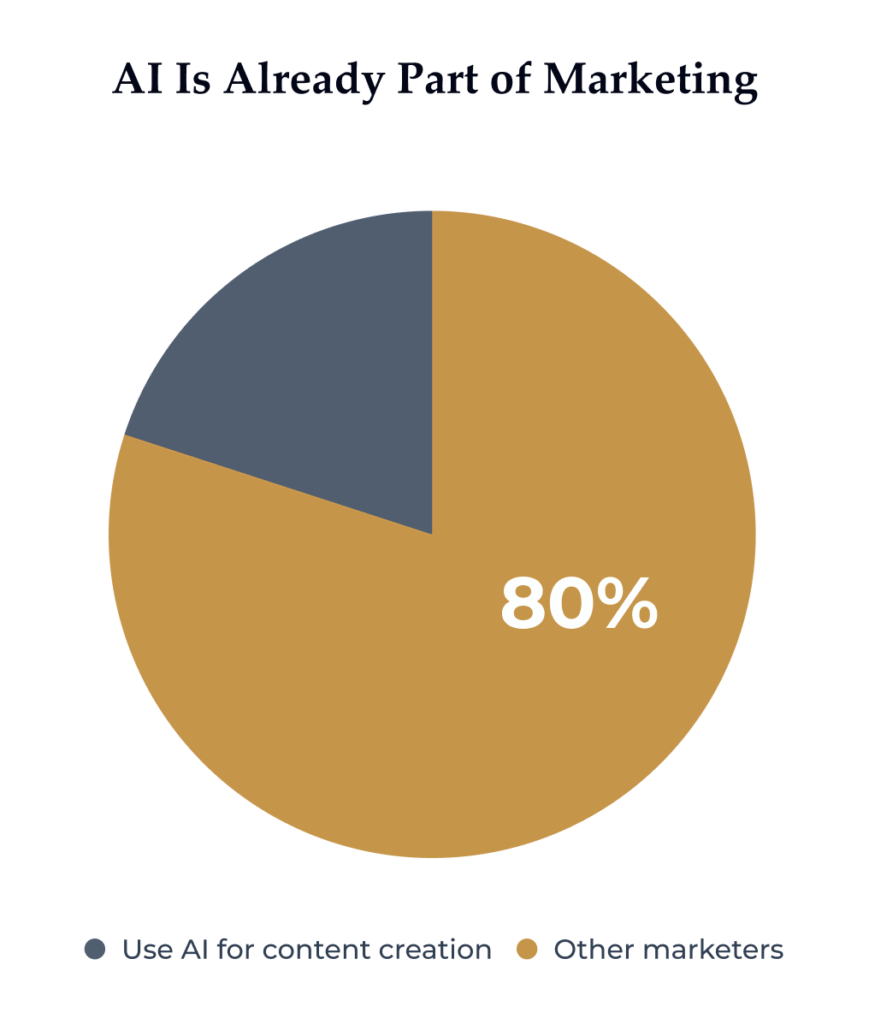 About 80% of marketers now use AI for content creation, according to HubSpot's 2026 marketing data. Adoption is no longer the big question. The issue is how much responsibility the technology should carry.
The cost of over-reliance rarely shows up immediately. At first, the shortcut can look like savings. Content goes out faster. An ad account may appear to run itself.
The problems can build over time. Your search rankings might drop. Your brand could start to sound like your competitors. You may spend money on ads that get clicks but no customers. Sometimes a claim or image you publish leads to legal issues.
This guide starts with where AI genuinely helps. Then it covers eight ways over-reliance can backfire and how to keep a person accountable for the work.
If you are evaluating an AI-heavy vendor or reviewing your own tool stack, the checklist near the end gives you practical questions to ask.
What AI Is Genuinely Good At
Where AI Saves Real Time
AI is now a regular marketing tool that saves time when used well. Research is one example. It can gather information on unfamiliar topics, which someone then checks for accuracy and decides what to use.
The same idea applies to first drafts. AI creates a rough version. A writer then shapes it into something ready to publish.
AI can help with repetitive or high-volume tasks. Marketers can have it generate multiple headline variations for testing. It can summarize long reports and sort through large amounts of information.
Data analysis can benefit too. Its value depends on someone who understands which questions matter and how to use the findings.
Current generative AI guidance recognizes research and structuring original content as useful applications.
These are valid uses, but people still need to stay involved. Research needs checking, and drafts need an editor who understands the business. Data needs interpretation before anyone acts on it. This is the role of human oversight in marketing.
The risks below begin when that oversight disappears.
Risk 1: AI-Written Content and Your Search Visibility
What Google Actually Penalizes
Of all the AI marketing risks business owners ask about, search penalties come up quickly.
Many assume Google penalizes all AI-written content. It doesn’t penalize AI content just because AI was involved. Its policy focuses on low-value content created at scale.
Many assume Google penalizes all AI-written content. It doesn’t penalize AI content just because AI was involved. Its policy focuses on low-value content created at scale."
Google calls this scaled content abuse. It includes producing many pages mainly to manipulate search rankings without adding value for users. Google uses the same standard for content created by people and AI tools.
Adding value has a practical meaning. The page should offer more than a generic summary. That may come from firsthand expertise or a real customer example. Original business information can add something new. So can a clear point of view based on what the company has learned from doing the work.
Strong content development starts with what the business knows. The writing comes after that. Trouble begins when publishing becomes a volume game.
AI can quickly increase output overnight. The content calendar fills up fast. This activity feels productive. But more pages don’t automatically mean useful content.
AI-generated content problems may take months to show up. New pages struggle to gain traction. Existing rankings may start to slip. A large content library can still bring little return if the pages add nothing readers can’t find elsewhere.
So, does AI content hurt SEO? Sometimes. What matters more is what ends up on the page. If the content has real expertise behind it, AI can still be part of the process. Problems begin when companies use it to produce page after page with little substance. More content is easy. Useful content takes work.
Risk 2: Brand Voice Drift
How the Drift Happens
A brand usually doesn’t lose its voice overnight. It happens bit by bit.
A blog may include wording the owner would never use. Then the emails start sounding strangely similar to one another. After enough of that, the company may still publish regularly, but less and less of the writing sounds distinctly like them.
AI tends to slip back into familiar language when it isn’t given enough direction. Over time, different companies can start sounding surprisingly alike. Publish enough of that copy without a real edit, and the brand’s own voice starts to fade.
AI tends to slip back into familiar language when it isn’t given enough direction. Over time, different companies can start sounding surprisingly alike."
A documented voice guide helps stop that drift. It identifies preferred language and words the company avoids. It shows how formal or conversational the brand should sound. Real examples give the editor something concrete to work from.
A human editor then checks AI-assisted material against those standards before it goes live. Brand voice can change as the business changes. A company may enter a new market, shift its positioning, or start talking to a different type of customer.
These decisions require knowledge of the company and where it wants to go. AI can follow the direction once someone sets it. A recognizable voice helps keep your brand competitive. It helps new marketing still sound like the business behind it.
Risk 3: AI Images, Logos, and the Ownership Question
What Copyright Law Covers
AI can create a logo or image in seconds, but ownership afterward is a separate question. In the U.S., copyright protection depends on human authorship. Federal registration guidance says you can’t register work made entirely by AI. If applying, you must disclose AI-generated material above the de minimis threshold. Before using an AI-generated image in your brand, understand your rights.
A logo should identify the company and distinguish it from others. If the work lacks enough human authorship for copyright protection, the business may not have the rights it expected. That makes ownership harder to ignore. Know who owns AI-generated content before making it part of the brand.
Generative tools can produce images that look too close to existing marks or creative work. This is another reason to review the work before it becomes part of the brand. AI can help explore ideas early, but the business should understand its rights before using the finished asset.
Risk 4: Social Media on Autopilot
Where Automation Breaks Down
Scheduling tools help keep your social content on track, especially when things get busy. But problems can develop if you depend too much on automation.
Over time, machine-written feeds start to sound alike. When captions lack personality and posts are too generic, people engage less because nothing feels unique about the business.
Community management doesn’t work the same way as scheduled posts. Comments, direct messages, and reviews happen in real time, and a bot can’t handle them on its own. Someone must understand the context before deciding how to respond.
A customer may be frustrated or looking for clarification. An automated reply can strike the wrong tone or make a promise the business never intended. It can also respond publicly when it would be better to take the conversation private.
A feed can publish every day and still feel like nobody is listening. Consistent social media management includes what happens around the scheduled content.
Automation can handle routine work. Someone still needs to be there for the conversation.
Risk 5: Paid Search Automation Without Guardrails
Whose Goals the Algorithm Serves
Paid search platforms now handle a lot of the routine work. They can change bids as results come in and go beyond the keywords a marketer started with.
These features save time. They also optimize toward the goals the platform can measure, which don’t always match what the business needs.
A platform doesn’t automatically know which jobs produce the best margins, or which lead types rarely become customers. Unless someone feeds that information back into the campaign, the system keeps working toward the conversion signals it receives.
Auto-applied recommendations need review for the same reason. Fully automated campaign types need someone to check where the budget goes.
Someone still needs to review search terms, placements, and exclusions to see where the budget is going, and leads need to be tracked. This oversight is part of managed paid search campaigns. Without it, money can quietly go to wrong-intent clicks that look fine in the dashboard but never turn into real business.
Risk 6: Made-Up Statistics and Fake Citations
The Substantiation Problem
AI can make up a statistic that sounds believable enough to use. The same goes for a source. Until someone checks it, either one could be wrong.
This is one of the clearest problems with AI marketing tools because fabricated information can survive a quick review. Publishing an unverified claim can damage credibility and create legal exposure. Federal advertising substantiation rules require advertisers to have a reasonable basis for objective claims before making them.
This is one of the clearest problems with AI marketing tools because fabricated information can survive a quick review. Publishing an unverified claim can damage credibility and create legal exposure."
The AI tool doesn’t take responsibility for what it generates. The business that publishes the claim does, so verification is essential before anything goes live.
Trace every statistic back to a live primary source before publication. Leave the number out if you can’t verify it. This also goes for studies and quotes. AI can point you to a source, but a person needs to confirm it before publication.
Risk 7: AI-Built Websites and Accessibility Gaps
Where Generated Code Falls Short
AI can help build your site and add alt text, but have a human review everything for accessibility. A screen reader should be able to follow the page in the right order, and someone using only a keyboard should still be able to navigate menus and forms.
Federal web accessibility guidance explains that ADA requirements apply to websites of businesses open to the public. It also points to WCAG standards for technical direction.
A business still must meet ADA and WCAG requirements, even when an AI tool helped build the site. Generated code and auto-written alt text can miss accessibility requirements. Alt text may describe what appears in an image without capturing why the image is there or what information the user needs from it. Automated checks have limits too. A site can clear a scan and still create problems for actual users.
Accessibility failures often look different from ordinary website bugs. There may not be an obvious error message.
The problem may surface through a complaint or demand letter instead. Ongoing ADA accessibility optimization puts a qualified person back into the review process.
Risk 8: Strategy Can't Be Prompted
What AI Cannot Know
A prompt can create a marketing plan in seconds. The tactics may sound reasonable, but the plan depends on the information you provide the tool. AI has never sat in the company's sales meetings.
It doesn’t know where the business stands in its market unless you tell it. A generic prompt won’t explain the company’s margins, what the sales team is hearing from prospects, or whether the operation already has more work than it can comfortably handle.
Experience matters. A campaign may have failed years ago for reasons never shared online. Someone inside the company knows what happened. The AI tool does not.
These details shape strategy. Two companies can sell the same service in the same market and still need very different plans. One may need more leads; another may need better-qualified leads.
A generic prompt can produce the same kind of plan your competitors could generate just as easily. Differentiation comes from what AI cannot know on its own. A marketing strategy built around your business starts with those realities.
They help determine where to spend time and budget. AI can execute a plan once people set the direction.
How to Tell If Your Marketing Is AI-Dependent
Many strong marketing programs use AI. Dependence starts when nobody can clearly explain the work or take responsibility for the results.
These questions are part of basic due diligence. Ask them when evaluating a vendor or reviewing your own team.
- Who reviews AI-assisted work before it goes live? A specific person or role should be responsible for the final version.
- Where in the process is AI used? The vendor or team needs to clearly explain what the tools handle and where people step in.
- Who owns the finished output? Ask this before AI-generated logos or imagery become important business assets.
- What brand documentation guides the tools? Customer-facing content needs more direction than a general prompt.
- How are results measured? Post counts and activity reports track output. Ask how the work connects to business results.
- What happens when the AI gets something wrong? Someone needs to own the correction and make sure the same problem doesn’t happen again.
Clear answers show that someone is still responsible for the work behind the tools.
The Right Way to Use AI in Marketing
The Responsible Model
The responsible model is straightforward. AI drafts. People decide.
AI can accelerate the work. People remain responsible for what goes out and what happens next. A tool can produce a first draft. An editor decides if it belongs in the campaign. AI can summarize research. A person verifies the source before using the information.
Helpful, people-first content still sets the standard for search, no matter who or what created the first draft. Original information and firsthand expertise give a page a reason to exist.
Human review helps keep those things in the work and gives the page more to offer than a generic AI draft. Small teams can start with one rule. Nothing AI-assisted goes live until a named person reviews and approves it.
Many business owners still ask, should I use AI for my marketing? Yes, when it supports the people doing the work. Use the tool where it saves time. Keep a person responsible for decisions that affect the brand and budget.
Frequently Asked Questions
Does Google penalize AI-generated content?
No, Google doesn’t penalize content simply because it was created with the help of AI. Its spam policies focus on large amounts of low-value content. These rules apply to both human- and AI-generated content. What matters most is that the final page is useful to users.
Can you copyright an AI-generated logo or image?
Yes. AI can be useful for research, first drafts, summaries, and data analysis. The checklist above gives you a way to see where a person still needs to step in, from reviewing the content to making the final call and deciding whether the work is actually helping the business.
Should small businesses use AI for marketing?
Copyright protection still depends on human authorship. Material created entirely by AI can’t be registered, although the human-created parts of a larger work may qualify. Applicants must also disclose AI-generated material above the de minimis level. For a business, the practical question is what rights it has before making that visual a major part of the brand.
How can you tell if content was written by AI?
Telltale patterns are easy to spot. The writing starts repeating the same structures or falls back on generic language. These clues aren’t foolproof, though. People write flat copy too. A strong editor can rework AI-assisted content enough that the usual signs disappear.
What matters more is the finished content. Is it accurate, and can its claims be verified? Does it help the reader and sound like the business that published it?
What marketing tasks should never be fully automated?
Strategy needs a person who understands the business. Community responses require judgment about the customer and the situation.
Factual advertising claims need verification before publication. Brand decisions also need an accountable owner.
Automation can support all these areas. A person should remain in charge.
Keep People Accountable for the Results
AI will keep getting better at marketing tasks. Faster output also makes human oversight more valuable.
AI can speed up the work. People still own the judgment and results. Each of the AI marketing risks grows when that ownership slips.
DZ & Associates uses AI with human oversight and holds people accountable for strategy and results. Our AI search services follow this model. If you’re rethinking how much of your marketing runs on automation, contact the team to start a marketing strategy conversation.
References:
Federal Trade Commission. "FTC Policy Statement Regarding Advertising Substantiation." Federal Trade Commission, www.ftc.gov/legal-library/browse/ftc-policy-statement-regarding-advertising-substantiation.
Google. "Google Search's Guidance About AI-Generated Content." Google Search Central, Google for Developers, https://developers.google.com/search/docs/fundamentals/using-gen-ai-contentdevelopers.google.com/search/docs/fundamentals/using-gen-ai-content.
HubSpot. "2026 Marketing Statistics, Trends, and Data." HubSpot, 2026, www.hubspot.com/marketing-statistics.
United States Copyright Office. "Copyright Registration Guidance: Works Containing Material Generated by Artificial Intelligence." United States Copyright Office, 2023, www.copyright.gov/ai/ai_policy_guidance.pdf.
United States Department of Justice. "Guidance on Web Accessibility and the ADA." ADA.gov, 2022, www.ada.gov/assets/pdfs/web-guidance.pdf.